
Int J Chem Res, Vol 10, Issue 4, 11-18Research Article
Cr(VI) Oxidation Using Benzimidazolium Fluorochromate: Kinetics and Mechanism of the Oxidation of Some Diols
DINESH PANDAY
Department of Chemistry, Mohanlal Sukhadia University, Udaipur (India)
*Corresponding author: Dinesh Panday; *Email: [email protected]
Received: 02 Jun 2026 Revised and Accepted: 22 Jul 2026
Abstract
Objective: To investigate the kinetics and mechanism of the oxidation of four vicinal diols, four non-vicinal diols, and one monoether by benzimidazolium fluorochromate (BIFC) in dimethyl sulfoxide medium.
Methods: The oxidation reactions were studied under pseudo-first-order conditions using spectrophotometric monitoring of BIFC. Product analysis, kinetic measurements, deuterium isotope effect studies, and structure–reactivity correlations were employed to elucidate the reaction mechanism.
Results: Vicinal diols underwent glycol-bond fission to form carbonyl products, whereas non-vicinal diols and the monoether yielded hydroxycarbonyl compounds. The reaction showed first-order dependence on BIFC and Michaelis–Menten-type kinetics with respect to the substrate. A significant kinetic isotope effect and Taft correlation indicated α-C–H bond cleavage and the development of an electron-deficient transition state in the rate-determining step.
Conclusion: The oxidation proceeds through the formation of a substrate–BIFC complex followed by a hydride-transfer process. Vicinal diols undergo oxidation via a mechanism involving glycol-bond fission, whereas non-vicinal diols are converted into the corresponding hydroxycarbonyl compounds. The kinetic and mechanistic results provide strong support for the proposed reaction pathways and the role of substrate structure in determining reactivity.
Keywords: Diols, Benzimidazoliumfluorochromate, Kinetics, Oxidation, Correlation, Mechanism
© 2026 The Authors.Published by Innovare Academic Sciences Pvt Ltd. This is an open access article under the CC BY license (http://creativecommons.org/licenses/by/4.0/)
DOI: http://dx.doi.org/10.22159/ijcr.2026v10i4.381 Journal homepage: https://ijcr.info/index.php/journal
Introduction
Specific and selective oxidation of organic compounds under non-aqueous conditions is an important reaction in synthetic organic chemistry. Such transformations play a vital role in the synthesis of pharmaceuticals, fine chemicals, fragrances, agrochemicals, and other valuable organic intermediates.
For this, a wide range of compounds containing Cr(VI) have been demonstrated to be efficient reagents in organic synthesis and have been used in both aqueous and non-aqueous conditions for the oxidation of organic compounds [1-4]. There is continued interest in the development of new Cr(VI) reagents for the effective and selective oxidation of organic substrates, in particular alcohols, under mild conditions. Therefore, the search for new oxidizing agents is of interest to synthetic organic chemists.
Benzimidazolium fluorochromate is also one such oxidant developed recently. It is a more efficient and stronger oxidizing agent. This new compound is more efficient for quantitative oxidation of several organic substrates and has certain advantages over similar oxidizing agents in terms of the amount of oxidant and solvent required, short reaction times and high yields.
The kinetics of oxidation of organic diols has been studied by many reagents, such as trialkylammonium fluorochromates [5], quinolinium fluorochromate [6], tripropylammonium fluorochromate [7], benzimidazolium dichromate [8], benzyltrimethylammonium tribromide [9], pyridinium bromochromate [10], hexamethylenetetramine-bromine [11], isoquinolinium dichromate [12], benzyltrimethylammonium dichloroiodate [13], bromine in acid solution [14], and butyltriphenylphosphonium dichromate [15]. We have been interested in the kinetic and mechanistic studies of Cr(VI) species. Literature survey reveals that no report is available on the kinetics of the oxidation of organic diols by BIFC. Therefore, a systematic study of the oxidation of diols by BIFC was undertaken. Hence, the objective of the present work was to investigate the kinetics, mechanism, substituent effects and solvent effects in the oxidation of selected diols by benzimidazolium fluorochromate.
Materials and Methods
Materials
Benzimidazole and chromium trioxide were obtained from Fluka (Buchs, Switzerland). BIFC was synthesized according to the reported procedure [16], and its purity was confirmed iodometrically. Ethanediol (99%, Sigma-Aldrich, Banglore, India), propane-1,2-diol (99%, Sigma-Aldrich, Banglore, India), butane-1,2-diol (98%, Sigma-Aldrich, Banglore, India), butane-2,3-diol (98%, Sigma-Aldrich, Banglore, India), propane-1,3-diol (98%, Sigma-Aldrich, India), butane-1,3-diol (99%, Sigma-Aldrich, Banglore, India), butane-1,4-diol (99%, Sigma-Aldrich, Banglore, India), pentane-1,5-diol (97%, Sigma-Aldrich, Banglore, India), and 2-methoxyethanol (99%, Merck Millipore, Mumbai India) were AR grade and used as received.[1,1,2,2-2H4] Ethanediol (DED) was prepared by reducing diethyl oxalate (LOBA Chemical, Vasai, India, AR grade, 98%) purity with lithium aluminium deuteride (AR, BDH, Mumbai, India) [17]. The isotopic purity of [1,1,2,2-2H4] ethanediol was 91±3%, as determined from its nuclear magnetic resonance (NMR, 400 MHz, JEOL, Japan) spectrum and reported previously by Kalal and Panday[12]. Solvents were AR-grade products of E. Merck, Banglore, India, and were purified when necessary by standard methods [18]. p-Toluenesulfonic acid (LOBA Chemical, Vasai, India, AR grade, 98% purity) was used as the source of H⁺ ions.
Product analysis
Under kinetic condition i. e., excess of diol over oxidant, product analysis was carried out. In this experiment, the ethanediol (0.2 mol) and BIFC (0.01 mol) were taken in 100 ml DMSO and it was then left in dark for a day to ensure completion of the reaction. The residue was treated an excess (200 ml) of a saturated solution of 2,4-dinitrophenylhydrazine in 2 mol dm-3HCl and kept in a chillier for whole night. The precipitated 2,4-dinitrophenylhydrazone (DNP) was filtered off, dried, recrystallized from ethanol and weighed. The formation of DNP earlier and after recrystallization was 6.56 g (91%) and 6.05g (84%), correspondingly. The crude oxidation product was obtained in approximately 91% yield. Subsequent recrystallization afforded the pure product in 84% yield. The reduction in isolated yield is attributed to normal product losses during recrystallization, filtration, and handling procedures. The DNP derivatives were confirmed to be homogeneous by thin-layer chromatography (TLC; Merck Millipore, Bengaluru, India). The identities of the products were established by comparing their melting points (m. p.), determined using a melting point apparatus (Thermo Fisher Scientific, Mumbai, India), with those reported in the literature [19]. In the oxidation of ethanediol and propane-1,2-diol, the identity of the products were confirmed by determining the m. p. with authentic samples of DNP of hydroxyl ethanal and 3-hydroxybutanal, respectively.
Stoichiometry
The stoichiometry of the reaction was determined by carrying out several sets of experiments with varying amounts of BIFC largely in excess over ethanediol. The estimation of unreacted BIFC showed the following reaction:

 ….. (1)
BIFC act as 2 electron oxidant in the reaction
Kinetic measurements
The reactions were followed under pseudo-first-order conditions, keeping a large excess (x15 or more) of diols over BIFC. The solvent was DMSO, unless specified otherwise. The reactions were followed at constant temperatures (±0.1 K), by monitoring the decrease in [BIFC] spectrophotometrically at 370 nm for up to 80% of reaction by using spectrophotometer (ELICO, SL 177, Hyderabad, India). A graph between log [BIFC] and time was linear with r2>0.99. Each kinetic experiment was performed independently three times (n = 3), and the reported rate constants represent the mean±SD. The results were reproducible within the experimental error. In correlation analyses coefficient of determination (R2or r2), standard deviation (sd) and Exner’s parameter (ψ) [20] was used.
Results and Discussion
The rate laws and other experimental data were attained for all the diols investigated. As the results were similar, only representative data are given here. The oxidation products depend on the nature of the diol. Vicinal diols undergo glycol-bond fission to yield the corresponding carbonyl compounds, whereas non-vicinal diols and the monoether are oxidized to the corresponding hydroxycarbonyl compounds.
Rate laws
The reactions are first order with respect to BIFC. Further, the pseudo-first order rate constants (kobs) do not depend on the initial concentration of BIFC (table 1). Fractional order dependency (0<order<1) was observed with respect to diols. A plot of 1/kobsversus 1/[Diol]was straight line with positive intercept (fig. 1). This suggests the existence of following overall rate law and mechanism:
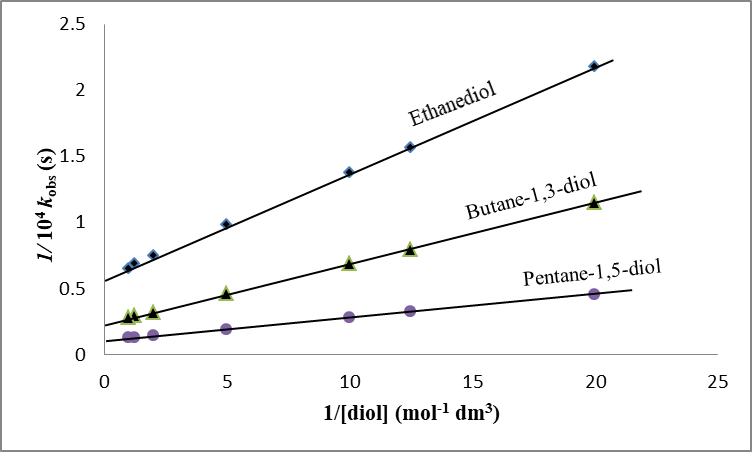
Fig. 1: A plot of1/104kobs versus 1/[Diol] at 303K, [TsOH]= 0.6 mol dm-3; [BIFC] = 0.001 mol dm-3.
The observed first-order dependence on oxidant concentration together with the fractional-order dependence on diol concentration and the linear relationship obtained from the reciprocal plots are consistent with Michaelis–Menten-type kinetics. These observations support the formation of a reversible intermediate complex between BIFC and the substrate prior to the rate-determining decomposition step. Further, Equation (5) demonstrates a Michaelis–Menten-type dependence of kobs on diol concentration. At low diol concentrations, kobs increases proportionally with [diol], whereas at higher concentrations it approaches the limiting value (k2), giving rise to the observed fractional-order kinetics. This behavior supports the formation of a reversible BIFC–diol intermediate complex prior to its rate-determining decomposition.
Table 1: Rate constants for the oxidation of diols by BIFC at 303K, [H+] = 0.6 mol dm-3.
Diol (mol dm-3) |
103[BIFC] (mol dm-3) |
104kobs (s-1) | |||
| Ethanediol | Butane-2,3 diol | Butane-1,3-diol | Pentane-1,5-diol | ||
| 0.05 | 1.0 | 0.46 | 33.4 | 0.87 | 2.18 |
| 0.08 | 1.0 | 0.64 | 47.2 | 1.26 | 3.06 |
| 0.1 | 1.0 | 0.73 | 54.7 | 1.45 | 3.52 |
| 0.2 | 1.0 | 1.02 | 81.2 | 2.15 | 5.15 |
| 0.5 | 1.0 | 1.35 | 111 | 3.11 | 6.81 |
| 0.8 | 1.0 | 1.47 | 123 | 3.37 | 7.48 |
| 1.0 | 1.0 | 1.55 | 136 | 3.51 | 7.73 |
| 0.8 | 0.2 | 1.41 | 118 | 3.45 | 7.23 |
| 0.8 | 0.4 | 1.53 | 116 | 3.29 | 7.39 |
| 0.8 | 1.5 | 1.48 | 125 | 3.25 | 7.52 |
| 0.8 | 2.0 | 1.45 | 121 | 3.41 | 7.45 |
| 0.8 | 5.0 | 1.51 | 128 | 3.35 | 7.32 |
| 1.0 | 1.0 | 1.61* | 132* | 3.63* | 7.65* |
a[Diol] values represent initial substrate concentrations. bAll reactions were monitored up to approximately 80% completion, and the first-order plots were linear with r²>0.99. cThe asterisk (*) denotes reactions performed in the presence of 0.01 mol dm⁻³ acrylonitrile. dValue are reported as mean±SD from three independent determinations (n = 3)
The large variation in the observed rate constants among the investigated diols reflects the strong influence of substrate structure on the rate-determining decomposition of the intermediate diol–BIFC complex. The differences in reactivity arise primarily from electronic effects associated with alkyl substitution at the carbon atoms bearing the hydroxyl groups.
Effect of temperature
The reactions were studied in the temperature range 293K to 323K for diols, using eq. (5) the value of K# and k2 were evaluated from the double reciprocal plots. For complex formation, the thermodynamic parameters (table 2) and the activation parameters (table 3) for decomposition of complexes were determined at different temperatures, from the value of K# and k2, respectively.
Table 2: Formation constants and thermodynamic parameters of Diols-BIFC complexes.
| Diol | K#(dm3 mol-1) | ∆Hf kJ mol-1 |
∆Sf J mol-1K-1 |
∆Gf(298K) kJ mol-1 |
|||
| 293K | 303K | 313K | 323K | ||||
| Ethanediol | 12.6 | 7.32 | 3.76 | 2.82 | -43.1±2.4 | -118±7.9 | -8.1±1.9 |
| Propane-1,2-diol | 11.6 | 6.52 | 3.45 | 2.56 | -43.6±2.3 | -120±7.4 | -7.8±1.6 |
| Butane-2,3-diol | 10.5 | 5.68 | 3.39 | 2.25 | -41.8±1.8 | -117±5.3 | -8.3±1.5 |
| Butane-1,2-diol | 13.6 | 6.67 | 4.12 | 2.89 | -42.8±2.1 | -119±6.7 | -8.0±1.7 |
| Propane-1,3-diol | 12.2 | 7.18 | 3.58 | 2.72 | -43.8±2.6 | -121±4.2 | -7.9±2.1 |
| Butane-1,3-diol | 10.2 | 5.45 | 3.32 | 2.18 | -42.8±1.1 | -119±7.2 | -7.4±0.9 |
| Butane-1,4-diol | 13.2 | 6.52 | 3.95 | 2.75 | -43.6±2.3 | -120±1.3 | -8.0±1.8 |
| Pentane-1,5-diol | 11.1 | 6.48 | 3.36 | 2.42 | -43.9±2.0 | -121±6.6 | -7.7±1.6 |
| 3-Methoxy-Butan-1-ol | 12.8 | 6.16 | 3.89 | 2.65 | -43.2±1.5 | -120±7.9 | -7.8±1.5 |
| DED | 13.5 | 6.61 | 4.05 | 2.58 | -45.5±1.7 | -126±5.6 | -8.1±1.2 |
aK#values were obtained from double-reciprocal plots (1/kobs versus 1/[Diol]). bΔHf and ΔSf values were determined from the Van't Hoff relationship using plots of lnK# versus 1/T. cΔGf values were calculated at 298 K using the Gibbs equation, ΔGf = ΔHf − TΔSf. dThe±values represent standard deviations obtained from linear regression analysis.
Table 3: Decomposition constants and activation parameters of Diols-BIFC complexes.
| Diol | 104k2 (s-1)293 K 303 K 313 K 323 K |
∆H#(kJ mol-1) |
∆S#(J mol-1 K-1) |
∆G#(298K)(kJmol-1) |
|||
| Ethanediol | 0.89 | 1.72 | 3.23 | 5.96 | 47.3±0.3 | -162±0.9 | 95.3±0.2 |
| Propane-1,2-diol | 9.84 | 16.1 | 27.4 | 46.2 | 38.1±0.8 | -173±2.7 | 89.6±0.6 |
| Butane-2,3-diol | 108 | 151 | 232 | 345 | 28.2±3.4 | -187±3.4 | 83.8±0.9 |
| Butane-1,2-diol | 16.2 | 25.4 | 42.5 | 70.3 | 36.1±1.1 | -176±3.3 | 88.3±0.1 |
| Propane-1,3-diol | 2.12 | 4.11 | 7.85 | 15.3 | 49.2±0.7 | -148±2.4 | 93.1±0.6 |
| Butane-1,3-diol | 2.94 | 5.78 | 11.4 | 20.8 | 48.8±0.1 | -146±1.1 | 92.3±0.3 |
| Butane-1,4-diol | 3.75 | 7.24 | 13.8 | 25.6 | 41.7±1.8 | -168±5.9 | 91.7±1.4 |
| Pentane-1,5-diol | 4.45 | 8.92 | 17.3 | 32.8 | 49.8±0.2 | -140±0.8 | 91.2±0.2 |
| 3-Methoxy-Butan-1-ol | 8.12 | 15.3 | 29.5 | 56.2 | 48.2±0.8 | -141±0.5 | 89.8±0.6 |
| DED | 0.15 | 0.31 | 0.62 | 1.21 | 52.2±0.3 | -160±1.2 | 99.6±0.3 |
| kH/kD | 5.93 | 5.54 | 5.21 | 4.92 | |||
ak2 values were obtained from the intercepts of double-reciprocal plots (1/kobs versus 1/[Diol]). bActivation parameters (ΔH#, ΔS#, and ΔG#) were calculated from Eyring plots of ln(k2/T) versus 1/T. cKinetic isotope effects (kH/kD) were calculated using the corresponding k₂ values at each temperature. dAll regression analyses yielded correlation coefficients (r²) greater than 0.995.
The activation enthalpy decreases with increasing alkyl substitution of the vicinal diols, indicating stabilization of the electron-deficient transition state by electron-donating alkyl groups. The lower ΔH# values observed for the more substituted substrates correlate with their higher reactivity and support the proposed hydride-transfer mechanism.
Effect of hydrogen-ion
In our present study, TsOH is used as a source of [H+], with an increase in [H+] concentration, the rate constant increases. In a plot between logkobs and log[H+], a straight line was seen For all selected diols, the slope of the straight line is less than one, indicating that the order of reaction in relation to [H+] is less than one. The fractional-order dependence on [H⁺] suggests a pre-equilibrium protonation of BIFC. Since protonation is incomplete over the experimental acid concentration range, the concentration of the reactive protonated species increases non-linearly with [H⁺], resulting in less-than-first-order acid dependence.
Consequently, as acidity increases, the rate correspondingly increases (table 4). The relationship between rate constant and [H+] is as follows:
1/kobs= 1/k0+a/[TsOH]
In the above equation ‘a’ (slope of the line) is a composite constant incorporating the protonation equilibrium constant and the rate parameters associated with the protonated oxidant species.
The results according to the relation are shown in fig. 2.
Table 4: Effect of hydrogen ions on the oxidation of diols by BIFC, [Diol] = 1.0 mol dm-3, [BIFC] = 0.001 mol dm-3, T = 303K.
| [H+] (mol dm-3) | 104kobs(s-1) | |||
| Ethanediol | Butane-2,3 diol | Butane-1,3-diol | Pentane-1,5-diol | |
| 0.05 | 0.48 | 20.5 | 0.66 | 3.25 |
| 0.08 | 0.63 | 29.4 | 1.01 | 4.12 |
| 0.1 | 0.81 | 34.9 | 1.18 | 4.36 |
| 0.3 | 1.32 | 80.3 | 2.38 | 6.21 |
| 0.6 | 1.55 | 136 | 3.51 | 7.73 |
| 1.0 | 1.76 | 201 | 4.46 | 8.92 |
aExperimental conditions: [Diol] = 1.0 mol dm-3, [BIFC] = 1.0×10⁻³ mol dm-3, and T = 303 K. bp-Toluenesulfonic acid (TsOH) was used as the source of H⁺ ions. cThe observed rate constants exhibit less-than-first-order dependence on [H⁺], indicating a complex acid-catalyzed pre-equilibrium rather than direct proportionality to acid concentration.
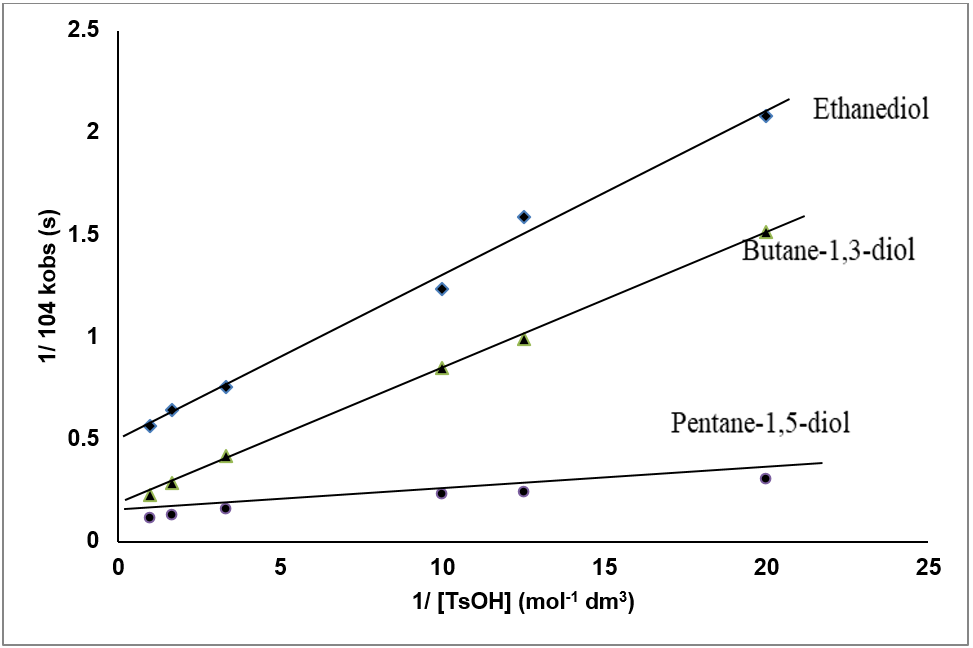
Fig. 2: A plot (1/104kobs) versus (1/[TsOH] at 303 K, [Diol]= 1.0 mol dm-3; [BIFC] = 0.001 mol dm-3.
Induced polymerization of acrylonitrile
The oxidation of diols by BIFC, in an atmosphere of nitrogen, failed to induce polymerization of acrylonitrile. Further the addition of acrylonitrile had no effect on the oxidation rate (table 1).
Deuterium isotope effect
The oxidation of [1,1,2,2-2H4] ethanediol (DED) was studied with BIFC to established the significance of α-C-H bond fission in the rate-controlling step, by keeping all other parameters constant. Using deuterated ethanediol (DED) rate constant k2was measured. The outcomes (table 2) showed that the formation constants of the complex of ethanediol and deuterated ethanediol are nearly close but rates of their decomposition (table 3) indicated a deuterium isotope effect (kH/kD = 5.54 at 303K). Because the isotopic purity of DED was 91±3%, the measured kH/kD value represents an apparent isotope effect and may slightly underestimate the intrinsic kinetic isotope effect. The corrected value is expected to be somewhat higher, but the mechanistic interpretation remains unchanged. In present study, the value of deuterium isotope effect decreases with increase in temperature.
Effect of solvent
Swain et al. [21] believed that the specific solvation is determined principally by the acidity and the basicity of the solvent. The data are analyzed using a two-parameter equation involving anion-solvating tendency (A) and cation-solvating tendency (B):
log k2 = aA+bB+C …. (6)
Here A represents the anion-solvating power of the solvent and B the cation-solvating power. C is the intercept term. (A+B) is postulated to represent the solvent polarity. The rates in different solvents were analysed in terms of Eq. (6), separately with A and B and with (A+B):
log k2 = 0.24±0.01 A+1.74±0.006 B –5.73…. (7)
R2 = 0.9998, sd = 0.0068, n = 19, ψ = 0.015, T = 303K
log k2 =-0.007±0.57 A – 4.53 …. (8)
r2 = 0.005, sd = 0.4693, n = 19, ψ = 1.02, T = 303K
log k2 = 1.72±0.05 B – 5.64…. (9)
r2 = 0.9896, sd = 0.0474, n = 19, ψ = 0.1, T = 303 K
log k2 = 1.24±0.19 (A+B) – 5.68…. (10)
r2 = 0.7119, sd = 0.249, n = 19, ψ = 0.55, T = 303 K
The oxidation rates of ethanediol in different solvents showed excellent correlation in Swain’s equation, with the cation-solvating power playing the major role. In fact, the cation solvation alone accounts for ca. 99% of the data. The correlation with anion-solvating power was very poor. The solvent polarity, represented by (A+B), also accounted for ca. 71% of the data.
Table 5: Solvent effect on the oxidation of ethanediol by BIFC at 303K.
| Solvent | 105k2 (sec-1) | Solvent | 105k2 (sec-1) |
| DMSO | 17.2 | Benzene | 2.15 |
| DMF | 9.24 | Dioxan | 2.99 |
| Acetophenone | 7.81 | Cyclohexane | 0.24 |
| Nitrobenzene | 6.92 | tert-Butyl alcohol | 1.76 |
| Acetone | 5.48 | Carbon disulfide | 0.91 |
| Tetrahydrofurane | 3.12 | 1,2-Dichloroethane | 5.97 |
| Acetic acid | 0.53 | Dichloromethane | 5.61 |
| Ethyl Acetate | 2.21 | Butanone | 4.12 |
| Chloroform | 4.46 | 1,2-Dimethoxy ethane | 1.54 |
| Toluene | 1.82 |
aSolvents were purified by standard literature procedures before use. bk2 values were calculated from Equation (5) using kinetic data obtained under pseudo-first-order conditions. cDielectric constants and additional solvent parameters are not included in this table and are available from standard solvent property compilations. dReported values represent the mean of at least two independent determinations, with reproducibility within experimental error.
Isokinetic relationship
The activation entropies (∆S*) and enthalpies (∆H*) of the oxidation of vicinal diols showed good correlation (r2 = 0.9921). The correlation was further checked with Exner’s criterion [22]. The Exner’s plot between the values of log k2 at 293K and 323K, for vicinal diols was linear (fig. 3) with perfect correlation (slope 0.846, r2=0.9999). The value of isokinetic temperature is 739±21 K. The linear isokinetic correlation implies that all the substrates are oxidized by the same mechanism and the changes in the rate are governed by the changes in both the enthalpy and entropy of the activation.
The ionic nature of BIFC under the present reaction conditions was investigated at 303K by conductivity measurements using a Conductivity Meter (Hanna Instruments, Mumbai, India). Low conductivity of solvent medium and insignificant variation in conductivity value on addition of BIFC in solvent was observed. Thus, BIFC remains non-ionized in our oxidation reaction system. The rate does not vary on addition of benzimidazolium-ion, also favors that BIFC persist non-ionized.
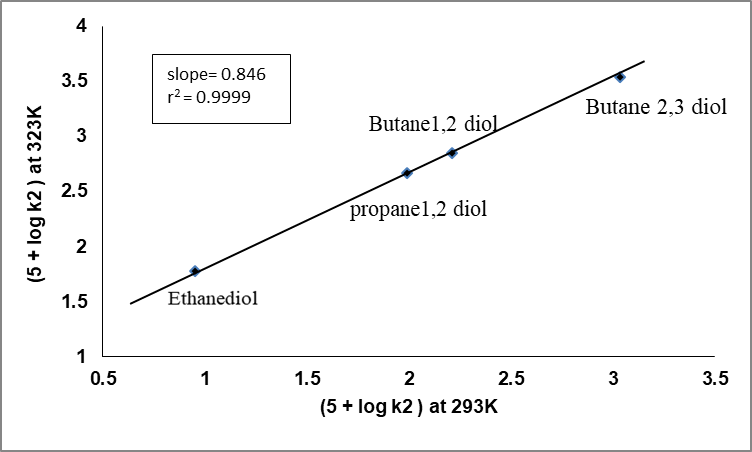
Fig. 3: Exner’s plot of (5+log k2) at 293K versus (5+log k2) at 323K for the oxidation of diols by BIFC.
It is observed that the protonated BIFC (Q) is an active electrophile and stronger oxidant (eq. 11). Thus, oxidation through BIFC depends upon hydrogen-ion concentration.
 …….. (11)
Here, BI represents benzimidazolium.
Generation of a protonated Cr(VI) complex has earlier suggested in the oxidation reaction of aliphatic primary alcohols by IQDC [23]. High reactivity obtained due to internal electron transfer from diol to BIFC which encourages by the protonation of BIFC. Further, hydrogen ion dependence shows fast equilibrium between (P) and (Q), lesser the value of equilibrium constant K1. Similar kind of hydrogen-ion dependency observed in case oxidation of aliphatic primary alcohols by IQDC [23].
Correlation analysis of reactivity
The oxidation rates of four vicinal diols had a strong correlation with Taft's Σ σ * values [24], despite the reaction constants being negative (table 6).
logk = ρ* Σ σ*+log k0 ……. (12)
The sum of the substituent constants for the substituents present on the two alcoholic carbons of the vicinal diols is shown by Σ σ*. The number of compounds for a correlation analysis is limited (4), but the results can be used qualitatively. The creation of an electron-deficient centre in the rate-determining step is confirmed by the negative polar reaction constant (ρ*), resulting in a rise in the reaction rate with an increase in the alkyl group's electron-donating power. The Taft correlation is based on only four vicinal diols and should therefore be regarded as qualitative. Further studies involving a larger series of vicinal diols would be desirable to strengthen the statistical significance of the structure–reactivity relationship.
Table 6: Correlation of rates of oxidation of vicinal diols in terms of Taft’s equation.
| Temperature (K) | ρ* | R2 | sd | Ψ |
| 293 | -2.12±0.01 | 0.9996 | 0.001 | 0.02 |
| 303 | -1.98±0.04 | 0.9911 | 0.097 | 0.10 |
| 313 | -1.89±0.02 | 0.9983 | 0.004 | 0.047 |
| 323 | -1.81±0.01 | 0.9993 | 0.006 | 0.031 |
No of data points = 04
Mechanism
The absence of any effect of a radical scavenger, acrylonitrile on the reaction rate, it is unlikely that oxidation through one electron is operative. The oxidation products were identified as carbonyl compounds by preparing their 2,4-dinitrophenylhydrazone (DNP) derivatives. Hence, it shows that under the experimental conditions employed in the present work, diols were oxidized to the corresponding hydroxy carbonyls. The presence of deuterium isotope effect confirms the cleavage of an α-C-H bond in the rate-determining step. The acid-catalysis is examined as earlier protonation of BIFC to produce BIFCH+.
A mechanism depicted in fig. 4 account for the experimental results. The rate law based on the mechanism proposed in fig. 4, can be obtained as below:
Applying the equilibrium treatment, BIFC can be determined:
-d[BIFC]/dt = k2 [R] = k2K1K2 [Diol] [BIFC] [H+] …. (13)
 ….. (14)
 …… (15)
Here, [BIFC]t = [BIFC]+[Complex], where K1is small and [B] formed will undergo reaction with diol.
or,  ……. (16)
Comparing equation (5) with (16), we get
 …… (17)
The hydride-ion transfer may occur either by an acyclic one-step bimolecular process or by cyclic process via chromate ester. Kwart and Nickle [25] have shown that a dependence of kH/kD on temperature, the loss of hydrogen proceeds through a concerted cyclic process. The data for protio-and deuterio-ethandiol, fitted to the familiar expression-
kH/kD = AH/AD exp (-∆Ea/RT) …. (18)
The activation energy difference for kH/kD is ca 4.87 kJ mol-1, which, as determined by final results agrees that the activation entropy (∆S#) and zero-point energy difference for both C-D and C-H bonds (ca.4.5 kJ mol-1) are nearly equal in the present reaction.
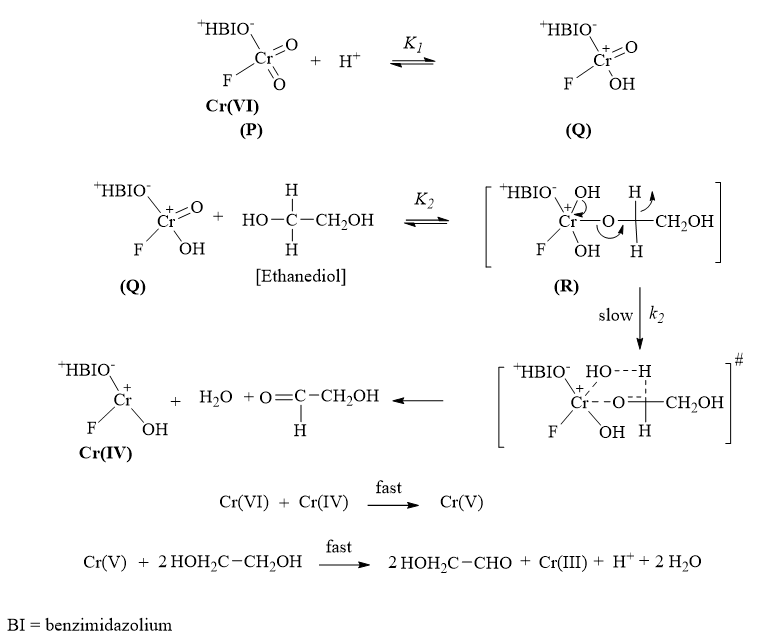
Fig. 4: Mechanism for the oxidation of ethanediol by BIDC.
It is agreeing with symmetrical transition state properties [26, 27]. Bordwell [28] has documented very cogent evidence against the occurrence of concerted one-step bimolecular processes by hydrogen transfer and in present study it is evident that the hydrogen transfer does not occur by an acyclic bimolecular process. The only truly symmetrical process involving linear transfer of hydrogen is intrinsically concerted sigmatropic reactions characterized by transfer of hydrogen in a cyclic transition state [29]. Littler [30] has also shown that cyclic hydride transfer, in alcohol oxidation by Cr(VI), involves six electrons, which resembles with Huckel-type system, is an allowed process. The negative entropy of activation in conjunction with other experimental data, supports the suggested mechanism.
Initially, Cr(VI) is reduced to Cr(IV). It is likely to react with another Cr(VI) to generate Cr(V), which is then reduced in a fast step to the ultimate product Cr(III). Such a sequence of reactions in Cr(VI) oxidations is well known [31].
Conclusion
The present study achieved its objective of elucidating the kinetics and mechanism of oxidation of selected diols by benzimidazolium fluorochromate (BIFC) in DMSO medium. The reaction follows Michaelis–Menten-type kinetics with respect to the substrate and first-order kinetics with respect to the oxidant. Kinetic, isotope-effect, substituent, and solvent studies support the formation of a protonated BIFC–diol complex followed by α-C–H bond cleavage through a cyclic hydride-transfer transition state. Solvent-effect analysis further indicates that the cation-solvating power of the medium plays an important role in determining reactivity. While the results provide strong evidence for the proposed mechanism, the relatively small number of vicinal diols used in the Taft correlation and the absence of independent structural characterization of reaction intermediates represent limitations of the present study. Further investigations employing a broader substrate range and direct spectroscopic detection of intermediates would provide additional support for the proposed mechanism.
Funding
The authors received no external funding for this research.
Availability Statement
The datasets generated and analyzed during the current study are available from the corresponding author on reasonable request.
AI Use Statement
No artificial intelligence (AI) or AI-assisted tools were used in the writing, data analysis, interpretation of results, or preparation of fig. for this manuscript.
Authors Contributions
Dinesh Panday: Conceptualization, methodology, experimental work, data collection, kinetic and mechanistic analysis, manuscript writing, review, and final revision.
Conflict of interests
The author declares that there is no conflict of interest regarding the publication of this manuscript.
References
Priyadarshini S, Guru PS, DS R, Dash S. Cr(VI) oxidation of cholesterol-a kinetic study using N-Cetylpicolinium dichromates, a class of novel phase transfer oxidants. Kinet Catal. 2019;60(2):147-54. doi: 10.1134/S0023158419020083.
Malik VS, Asghar BH, Mansoor SS. Kinetics and the mechanism of oxidation of methoxy benzaldehydes by benzimidazolium fluorochromate in an aqueous acetic acid medium. J Taibah Univ Sci. 2016;10(1):131-8. doi: 10.1016/j.jtusci.2015.05.009.
Singadiya A, Jangir R, Bishnoi P, Prakash O. Oxidation kinetics and influence of media on some α-hydroxy acids by 2-picolinium chlorochromate. Rasayan J Chem. 2022;15(4):2512-9. doi: 10.31788/RJC.2022.1547088.
Saini CP. Kinetic and mechanistic study of selective oxidation reactions by some Cr(VI) complexes: a review. J Appl Sci Educ. 2025;6(1):45-62. doi: 10.54060/a2zjournals.jase92.
Ghammamy S, Khorsandtabar S, Moghimi A, Sahebalzamani H. Oxidation of some organic diols with trialkylammonium Fluorochromates (VI), R3NH[CrO3F], (R= CH3, C2H5, C3H7 and C4H9) at room temperature and under microwave condition. J Mex Chem Soc. 2019;53(2):41-3. doi: 10.29356/jmcs.v53i2.1003.
Choudhary K, Sharma PK, Banerji KK. Kinetics and mechanism of oxidation of diols by quinolinium fluorochromate. Indian J Chem A. 1999;38(4):325-30.
Mansoor SS, Shafi SS. Correlation analysis of reactivity in the oxidation of some organic diols by tripropylammonium fluorochromate in non-aqueous media. Arab J Chem. 2016;9:S602-9. doi: 10.1016/j.arabjc.2011.07.004.
Saini CP, Panday D. Kinetics and mechanistic approach of the oxidation of some diols by benzimidazolium dichromate in dimethylsulfoxide medium. Period Res. 2025;14(1):37-46. doi: 10.5281/zenodo.17264627.
Goswami G, Kothari S, Banerji KK. Kinetics and mechanism of the oxidation of some diols by benzyltrimethylammoniumtribromide. J Chem Sci. 2001;113(1):43-54. doi: 10.1007/BF02708551.
Mathur D, Sharma PK, Banerji KK. Kinetics and mechanism of the oxidation of diols by pyridinium hydrobromide perbromide. Proc Indian Acad Sci. 1995;107(2):133-41. doi: 10.1007/BF02862983.
Gangwani H, Sharma PK, Banerji KK. Kinetics and mechanism of oxidation of diols by hexamethylenetetramine-bromine. J Chem Res. 1999;23(3):180-1. doi: 10.1177/174751989902300305.
Kalal R, Panday D. Kinetics and mechanistic study of the oxidation of some diols by isoquinolinium dichromate in aqueous acetic acid medium. Oxid Commun. 2021;44:513-22.
Mehla SK, Kothari S, Banerji KK. Kinetics and mechanism of the oxidation of some diols by benzyltrimethylammonium dichloroiodate. Oxid Commun. 2000;23:229-37.
Sharma V, Sharma PK, Banerji KK. Kinetics and mechanism of the oxidation of diols by bromine in acid solution. Proc Indian Acad Sci. 1998;110(1):65-73. doi: 10.1007/BF02871910.
Panday D, Kothari S. Kinetics and mechanism of the oxidation of diols by butyltriphenylphosphonium dichromate. Indian J Chem B. 2011;50B:918-25. doi: 10.3184/146867810X128941081894.
Sivamurugan V, Rajkumar GA, Arabindoo B, Murugesan V. Selective and clean oxidation of alcohols with benzimidazolium fluorochromate under solvent-free conditions. Indian J Chem B. 2005;44B:144-6. doi: 10.1002/chin.200518041.
Kemp TJ, Waters WA. The mechanisms of oxidation of formaldehyde and formic acid by ions of chromium (VI), vanadium (V) and cobalt (III). Proc R Soc Lond A. 1963;274(1359):480-99. doi: 10.1098/rspa.1963.0145.
Riddick JA, Bunger WB. Techniques of chemistry. Vol. 2. New York: Wiley Interscience; 1970.
Coffey S, editor. Rodd’s chemistry of carbon compounds. 2nd ed. Vol. 1D. Amsterdam: Elsevier; 1965.
Exner O. Additive physical properties. I. General relationships and problems of statistical nature. Collect Czech Chem Commun. 1966;31(8):3222-51. doi: 10.1135/cccc19663222.
Swain CG, Swain MS, Powell AL, Alunni S. Solvent effects on chemical reactivity. Evaluation of anion- and cation-solvation components. J Am Chem Soc. 1983;105(3):502-13. doi: 10.1021/ja00341a033.
Exner O. The enthalpy-entropy relationship. Prog Phys Org Chem. 1973;10:411-82. doi: 10.1002/9780470171899.ch6.
Kalal R, Panday D. Kinetics and correlation analysis of reactivity in the oxidation of aliphatic primary alcohols by isoquinolinium dichromate in non-aqueous medium. J Indian Chem Soc. 2021;98(2):100009. doi: 10.1016/j.jics.2021.100009.
Wiberg KB. Physical organic chemistry. New York: John Wiley & Sons; 1964. p. 416.
Kwart H, Nickle JH. Transition states in chromium (VI) oxidation of alcohols. J Am Chem Soc. 1973;95(10):3394-6. doi: 10.1021/ja00791a059.
Kwart H, Latimore MC. Kinetic deuterium isotope criterion for concertedness. J Am Chem Soc. 1971;93(15):3770-1. doi: 10.1021/ja00744a038.
Kwart H, Slutsky J. Transition-state structure in thermal β-cis-elimination of esters. J Chem Soc Chem Commun. 1972;(21):1182-3. doi: 10.1039/C39720001182.
Bordwell FG. How common are base-initiated, concerted 1,2 eliminations. Acc Chem Res. 1972;5(11):374-81. doi: 10.1021/ar50059a003.
Woodward RB, Hoffmann R. The conservation of orbital symmetry. Angew Chem Int Ed Engl. 1969;8(11):781-853. doi: 10.1002/anie.196907811.
Littler JS. Oxidations of olefins, alcohols, glycols and other organic compounds, by inorganic oxidants such as chromium (VI), manganese (VII), iodine (VII), lead (IV), vanadium (V) and halogens, considered in the light of the selection rules for electrocyclic reactions. Tetrahedron. 1971;27(1):81-91. doi: 10.1016/S0040-4020(01)92399-3.
Milazzo G, Caroli S, Sharma VK. Electrode potentials. New York: John Wiley & Sons; 1978.